Harley-Davidson 6-Speed Transmission Oil Capacity Guide
Harley-Davidson 6-Speed Transmission Oil Capacity is an essential topic that provides valuable insights.
Key Takeaways
- Correct Capacity Matters: The Harley-Davidson 6-speed transmission oil capacity ranges from 24 to 30 ounces depending on your model. Always verify with your owner’s manual.
- Use the Right Fluid: Always use Harley-recommended or compatible transmission fluid with the correct viscosity and JASO MA/MA2 rating.
- Change Fluid Regularly: Replace transmission oil every 10,000 to 15,000 miles to prevent wear and maintain smooth shifting.
- Do Not Overfill: Overfilling causes pressure buildup, leaks, and foaming, all of which harm transmission performance.
- Watch for Warning Signs: Rough shifts, whining noises, and difficulty finding gears are early signs that your transmission oil needs attention.
- Primary Fluid Is Different: Transmission oil and primary fluid are separate fluids for separate systems. Never mix them up.
- DIY Is Easy: With basic tools and this guide, you can change your transmission oil at home in under an hour.
📑 Table of Contents
- Understanding Your Harley-Davidson 6-Speed Transmission
- Harley-Davidson 6-Speed Transmission Oil Capacity Explained
- The Right Transmission Fluid for Your Harley
- Step-by-Step Transmission Oil Change Guide
- Common Transmission Oil Problems and How to Fix Them
- Expert Tips for Long-Lasting Transmission Health
- How to Avoid Costly Transmission Repairs
Understanding Your Harley-Davidson 6-Speed Transmission
What Makes the 6-Speed Transmission Special
Harley-Davidson has used its 6-speed transmission in many models for years. The design is simple but effective. It uses a series of gears and shafts to transfer power from the engine to the rear wheel. Each gear ratio is carefully chosen to give you strong acceleration and comfortable highway cruising.
The 6-speed setup gives riders more options than older 5-speed designs. You get tighter spacing between gears, which means smoother transitions. This is especially helpful on bikes with big torque, like the Softail and Touring models. The transmission also uses a wet clutch system, which means it relies on oil for cooling and lubrication.
Why Transmission Oil Matters
Transmission oil does more than just lubricate. It cools the gears, reduces friction, and helps the clutch engage smoothly. Without the right amount of oil, your gearbox runs hot. Heat causes the fluid to break down faster, which leads to more wear on internal components.
Over time, contamination builds up inside the transmission. Metal particles from normal gear engagement mix with the oil. If you do not change the fluid regularly, these particles act like tiny abrasives. They scratch bearing surfaces and speed up gear tooth wear. Keeping the oil level correct is one of the easiest ways to extend the life of your transmission.
Harley-Davidson 6-Speed Transmission Oil Capacity Explained
Exact Capacity Numbers by Model
The Harley-Davidson 6-speed transmission oil capacity varies slightly depending on your specific model and year. Here is a general breakdown of the most common figures:
- Street models (Sportster, Softail): approximately 24 to 26 ounces total capacity.
- Touring models (Road King, Street Glide, Road Glide): approximately 26 to 28 ounces total capacity.
- CVO and special edition models: may hold up to 30 ounces depending on the design.
Always double-check your owner’s manual for the exact number. The capacity listed above includes both the gearbox housing and the shift mechanism. Some riders only add enough to fill the main housing, which can leave the shift forks under-lubricated.
Primary Fluid vs. Transmission Oil
Many people confuse primary fluid with transmission oil. These are two different fluids that serve different purposes. The primary fluid lubricates the primary drive chain and clutch assembly. The transmission oil specifically cools and lubricates the gears inside the gearbox.
You need both fluids at the correct levels for your bike to perform well. Mixing them up or skipping one can cause serious problems. Always use the fluid type recommended by Harley-Davidson for each specific system. The transmission oil capacity does not include the primary fluid volume, so make sure you are filling the right reservoir.
| Model Type | Transmission Oil Capacity (oz) | Primary Fluid Capacity (oz) |
|---|---|---|
| Sportster (1991-2003) | 24 oz | 32 oz |
| Softail (2000-2017) | 26 oz | 32 oz |
| Touring (2000-2013) | 28 oz | 32 oz |
| CVO Models | 30 oz | 32 oz |
The Right Transmission Fluid for Your Harley
Recommended Fluid Types and Viscosity
Choosing the right transmission fluid is just as important as knowing the capacity. Harley-Davidson recommends using their own branded transmission fluid or a high-quality equivalent that meets the required specifications. The most common recommendation is a synthetic gear oil with the correct viscosity rating.
Most Harley 6-speed transmissions work best with a fluid that has a viscosity of around 75W-90 or 80W-90. This provides excellent gear protection across a wide range of temperatures. In colder climates, a slightly thinner fluid can help with cold starts and initial shifts. In hot climates, a heavier fluid maintains better film strength under heat.
Always look for fluids that meet the JASO MA or MA2 specification. This ensures the fluid is compatible with wet clutch systems. Using a fluid designed for automatic transmissions will damage your clutch plates and cause slipping.
What Happens If You Use the Wrong Fluid
Using the wrong fluid can cause a range of problems. Some fluids contain additives that are harmful to wet clutch surfaces. This leads to clutch slipping, which reduces power delivery and creates dangerous riding conditions. Other fluids are too thin and do not provide adequate gear protection.
Wrong fluids can also cause seal degradation over time. Your transmission seals may swell, crack, or become brittle. This leads to leaks, which lower the oil level and expose gears to metal-on-metal contact. The cost of replacing a transmission seal kit is far less than rebuilding a damaged gearbox.
Step-by-Step Transmission Oil Change Guide
Tools You Will Need
Before you start, gather the right tools and materials. Having everything ready makes the process faster and less frustrating. Here is what you will need:
- Correct transmission fluid (enough to fill the capacity)
- Socket set and wrenches
- Drain pan
- Funnel
- Clean rags
- New drain plug washer (if needed)
- Jack and stand or paddock stands
- Gloves and eye protection
The Drain and Refill Process
Start by warming up the transmission fluid. A short ride of about 10 minutes helps the old fluid flow out more completely. Then, park the bike on a level surface and secure it on a stand.
Locate the drain plug on the bottom of the transmission housing. Place your drain pan underneath and carefully remove the plug. Let the old fluid drain completely. This usually takes about 10 to 15 minutes. While you wait, inspect the drain plug for any metal shavings or debris.
Once the flow stops, reinstall the drain plug with a new washer. Tighten it to the factory torque specification, which is typically around 20 to 25 foot-pounds. Over-tightening can strip the threads or crack the housing.
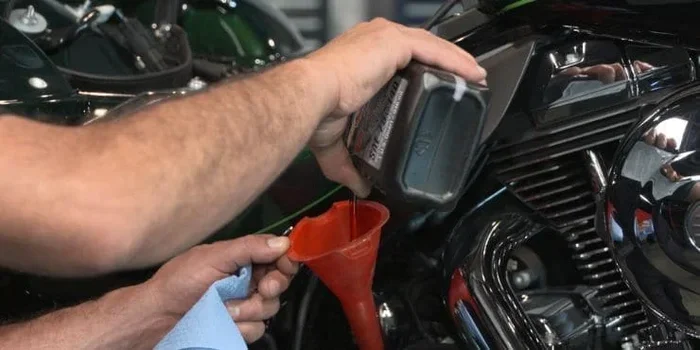
Now locate the fill plug on the side of the transmission housing. Remove it and insert a funnel. Slowly pour in the new fluid until it just reaches the bottom of the fill hole. Do not overfill. Too much fluid can cause pressure buildup and leaks.
Replace the fill plug and wipe away any spills. Start the bike and shift through all the gears to circulate the new fluid. Check for leaks around both plugs before riding.
Common Transmission Oil Problems and How to Fix Them
Signs Your Transmission Oil Needs Changing
Your bike will tell you when something is wrong with the transmission oil. Pay attention to these warning signs:
- Rough or clunky shifts: If shifting feels harsh or gritty, old fluid may be the cause.
- Whining or grinding noises: These sounds often indicate low oil levels or contaminated fluid.
- Difficulty finding gears: If you struggle to engage certain gears, the fluid may not be reaching the shift forks properly.
- Burning smell: A burnt odor comes from overheated transmission fluid that has broken down.
- Visible leaks: Oil spots under your bike may indicate a failing seal or loose drain plug.
Catching these signs early can save you from a major transmission repair. Do not ignore them. Even small changes in shift feel can signal a bigger problem brewing inside the gearbox.
Troubleshooting Shift Quality Issues
Sometimes the problem is not the fluid itself but the transmission oil level. Both too little and too much oil can cause shift problems. Low oil means the gears and forks do not get proper lubrication. Excess oil creates pressure that can push past seals and cause leaks.
If you have just changed the fluid and still experience rough shifts, check the fluid type. Make sure it meets the Harley-Davidson specifications for your model year. In some cases, a transmission flush may be needed to remove old fluid and contaminant buildup completely.
Expert Tips for Long-Lasting Transmission Health
Maintenance Schedule and Intervals
Harley-Davidson recommends changing your transmission oil every 10,000 to 15,000 miles. However, this interval can vary based on your riding conditions. If you ride in stop-and-go traffic, pull heavy loads, or ride in extreme heat, you may want to change the fluid more often.
Here is a simple maintenance schedule to follow:
- Every 5,000 miles: Check the transmission oil level visually.
- Every 10,000 miles: Perform a full fluid change with a new drain plug washer.
- Every 15,000 miles: Inspect the transmission housing and seals for any signs of wear or leaks.
- Every 30,000 miles: Consider a professional inspection of the entire drivetrain.
When to Seek Professional Help
Most riders can handle a routine transmission oil change at home with basic tools. But some situations call for a professional mechanic. If you notice metal shavings in the old fluid, this could indicate internal gear damage. A technician can perform a deeper inspection and advise on whether a rebuild is needed.
Also, if you are unsure about the correct Harley-Davidson 6-speed transmission oil capacity for your specific model, consult a dealer or experienced mechanic. Using the wrong capacity can lead to underfilling or overfilling, both of which cause problems. A professional can also check the shift mechanism and clutch adjustment to ensure everything works in harmony.
Quick Tips for Better Transmission Life
- Always warm up the transmission before checking the fluid level.
- Use only Harley-approved or compatible transmission fluids.
- Replace the drain plug washer every single time you change the oil.
- Do not mix different brands or types of transmission fluid.
- Keep a record of your fluid changes and mileage.
- Check for leaks after every oil change.
How to Avoid Costly Transmission Repairs
The Cost of Neglecting Transmission Maintenance
Skipping regular transmission oil changes is one of the most common causes of premature gearbox failure. Fresh fluid keeps gears lubricated and cool. Old fluid loses its protective properties and becomes abrasive. Over time, this wear adds up and can lead to gear tooth breakage, bearing failure, and shaft damage.
A complete transmission rebuild can cost anywhere from $1,500 to $3,000 or more. In contrast, a routine fluid change costs less than $50 in most cases. The math is simple. Regular maintenance saves you hundreds or even thousands of dollars in the long run.
Building a Maintenance Routine
The best way to protect your Harley-Davidson 6-speed transmission is to build a consistent maintenance routine. Set reminders on your phone or in your riding log. Track every fluid change and note any unusual symptoms between services.
When you buy a used Harley, always ask about the transmission fluid change history. If the records are unclear, do a full fluid change right away as a precaution. This simple step can prevent problems hidden by previous owners who may have neglected maintenance.
Frequently Asked Questions
What is the Harley-Davidson 6-speed transmission oil capacity for most models?
The typical capacity ranges from 24 to 28 ounces depending on the model. Street models like Sportsters and Softails usually hold around 24 to 26 ounces, while Touring models may need 26 to 28 ounces. Always verify with your specific owner’s manual for the exact number.
Can I use regular gear oil in my Harley-Davidson 6-speed transmission?
It is not recommended. Harley-Davidson specifies fluids that meet certain friction and wet clutch requirements. Regular gear oils may contain additives that are incompatible with your wet clutch system and can cause slipping or premature wear.
How often should I change the transmission oil in my Harley 6-speed?
Harley-Davidson recommends changing the transmission oil every 10,000 to 15,000 miles. If you ride in harsh conditions like heavy traffic, extreme heat, or with a passenger and luggage, consider changing it every 8,000 miles for best protection.
What happens if I overfill the transmission beyond the recommended oil capacity?
Overfilling causes excess pressure inside the gearbox. This can push fluid past seals and cause leaks. It can also cause foaming, which reduces the oil’s ability to lubricate properly. Both scenarios lead to increased wear and potential transmission damage.
Do I need to change the transmission fluid if I only ride my Harley occasionally?
Yes. Even if you ride infrequently, transmission fluid degrades over time due to moisture absorption and oxidation. Harley-Davidson recommends changing the fluid at least once a year, regardless of mileage, to maintain optimal protection.
What is the difference between primary fluid and transmission oil?
Primary fluid lubricates the clutch assembly and primary drive chain, while transmission oil specifically cools and lubricates the gears inside the gearbox. They are two separate systems with different fluid requirements and different capacity levels. Never substitute one for the other.
=== CONCLUSION ===
Knowing your Harley-Davidson 6-speed transmission oil capacity is one of the simplest yet most important things you can do as a rider. It takes just a few minutes to check and a little more time to change, but the payoff is huge. You get smoother shifts, cooler running gears, and a transmission that lasts for years of faithful service.
Use the right fluid, follow the correct capacity numbers, and stick to a regular maintenance schedule. These small habits add up to big savings and a much better riding experience. Your Harley deserves the best care you can give it, and this guide gives you the knowledge to do exactly that.
Now that you understand the ins and outs of transmission oil capacity for your 6-speed Harley, you are ready to take action. Grab your tools, pick up the right fluid, and give your gearbox the attention it deserves. Your bike will thank you every time you hit the road.
=== KEY TAKEAWAYS ===
Key Takeaways
- Correct Capacity Matters: The Harley-Davidson 6-speed transmission oil capacity ranges from 24 to 30 ounces depending on your model. Always verify with your owner’s manual.
- Use the Right Fluid: Always use Harley-recommended or compatible transmission fluid with the correct viscosity and JASO MA/MA2 rating.
- Change Fluid Regularly: Replace transmission oil every 10,000 to 15,000 miles to prevent wear and maintain smooth shifting.
- Do Not Overfill: Overfilling causes pressure buildup, leaks, and foaming, all of which harm transmission performance.
- Watch for Warning Signs: Rough shifts, whining noises, and difficulty finding gears are early signs that your transmission oil needs attention.
- Primary Fluid Is Different: Transmission oil and primary fluid are separate fluids for separate systems. Never mix them up.
- DIY Is Easy: With basic tools and this guide, you can change your transmission oil at home in under an hour.