Do Adults Need to Buckle in the Back Seat Every Time
Yes, adults absolutely need to buckle in the back seat every single time. Back seat passengers who skip their seat belts face serious injury and death risks in crashes. Rear seat belt use saves lives, reduces ejection risk, and keeps everyone in the vehicle safer.
Key Takeaways
- Back seat belts save lives: Unbelted rear passengers are three times more likely to die in a crash.
- Laws vary by state: Many states now require adults to buckle up in the back seat.
- Injury risk is real: Unbelted back seat occupants can become dangerous projectiles in a collision.
- Rideshare and taxi passengers: Adults often skip belts in rideshares, putting themselves at risk.
- Children model adult behavior: When adults don’t buckle up, kids are less likely to either.
- Airbags don’t replace seat belts: Even with modern safety features, belts are essential for all seats.
- It takes two seconds: Buckling up is the easiest life-saving habit you can build.
📑 Table of Contents
- Do Adults Need to Buckle in the Back Seat Every Time?
- The Science Behind Back Seat Seat Belt Safety
- Why Adults Skip the Back Seat Belt
- Rear Seat Belt Laws Across the United States
- How Back Seat Passengers Endanger Others
- Common Mistakes Adults Make About Back Seat Safety
- Quick Tips for Making Back Seat Belt Use a Habit
- Expert Insights on Back Seat Seat Belt Use
- Comparison: Belted vs. Unbelted Rear Passengers
- Key Takeaways
- Conclusion
Do Adults Need to Buckle in the Back Seat Every Time?
Here is a question that surprises a lot of people. Do adults actually need to buckle in the back seat every single time they ride in a car? The short answer is yes. Every single time. No exceptions. No “just for a short ride.” No “I am only going a few blocks.”
The truth is that back seat seat belt safety matters just as much as front seat safety. Many adults skip the rear seat belt because they think it is optional. They think the back seat is somehow safer. That is a dangerous myth. The data tells a very different story. Rear seat belt use is one of the simplest and most effective ways to survive a car crash.
In this article, we will break down exactly why adults need to buckle up in the back seat. We will look at the risks, the laws, the science, and the habits that put lives in danger. Whether you are a parent, a rideshare rider, or just someone who rides in the back often, this information could save your life.
The Science Behind Back Seat Seat Belt Safety
You might wonder why the back seat even needs a belt. Don’t airbags and crumple zones protect you? The answer is no. Vehicle safety features work best when combined with seat belt use. Airbags are designed to work with seat belts, not replace them.
How Crash Forces Affect Rear Passengers
During a collision, your body keeps moving at the same speed the car was traveling. This is Newton’s first law of motion, and it applies to every passenger in the vehicle. If a car hits a wall at 35 miles per hour, your body tries to keep moving at 35 miles per hour. A seat belt is the only thing that stops you.
Without a belt, a rear seat passenger can hit the front seats, the dashboard, the windshield, or even fly out of the vehicle. The forces involved in even a low-speed crash are enormous. Crash forces multiply with speed. A crash at 40 miles per hour generates enough force to make an adult body weigh several tons.
Ejection Risk and Fatality Rates
One of the biggest dangers of not wearing a back seat belt is ejection. Being thrown from a vehicle during a crash is one of the leading causes of traffic fatalities. According to the National Highway Traffic Safety Administration, unbelted passengers are far more likely to be ejected from a vehicle during a collision.
Here are some numbers that should grab your attention:
- Unbelted rear passengers are three times more likely to die in a crash than belted rear passengers.
- In fatal crashes, nearly half of rear seat occupants who died were not wearing seat belts.
- Crash survival rates jump significantly when all passengers buckle up, including those in the back.
- Ejected occupants have a much higher fatality rate than those who remain inside the vehicle.
These numbers are not abstract. They represent real people, real families, and real tragedies. The good news is that seat belt compliance can dramatically reduce these risks.
Why Adults Skip the Back Seat Belt
If the risks are so clear, why do so many adults skip the back seat belt? Understanding the reasons helps us fix the problem.
The “Short Trip” Myth
Many adults believe that short trips are safe enough to skip a seat belt. They think, “I am just going to the grocery store down the street.” But most accidents happen close to home. Studies show that the majority of crashes occur within 25 miles of where you live. And most happen at speeds under 40 miles per hour. A short trip is not a safe trip if you are not buckled up.
Perceived Safety of the Back Seat
There is a common belief that the back seat is the safest place in a car. For children, this used to be true. But for adults, the back seat can be just as dangerous as the front seat in a serious crash. Rear seat injuries happen more often than people realize, especially when passengers are not wearing belts.
Rideshare and Taxi Habits
Rideshare and taxi passengers are some of the worst offenders when it comes to back seat seat belt use. Many adults hop into the back of an Uber or Lyft and immediately forget to buckle up. They feel like they are just a passenger for a few minutes. But those few minutes can turn into a lifetime of regret if a crash occurs.
Here are some common reasons adults skip the back seat belt:
- They think short trips do not need a belt.
- They believe the back seat is inherently safer.
- They are in a taxi or rideshare and forget.
- They feel uncomfortable or restricted by the belt.
- They think airbags will protect them.
- They have never seen the consequences up close.
Rear Seat Belt Laws Across the United States
The legal requirements for back seat belt use vary from state to state. This is an important reason for adults to buckle up. But beyond the law, the personal risk is reason enough on its own.
States That Require Adult Back Seat Seat Belts
More and more states are passing laws that require adults to wear seat belts in the back seat. Here are some key points about rear seat belt laws:
- As of recent data, over 30 states plus Washington D.C. require adult rear seat passengers to buckle up.
- Some states only require belts in the back seat for certain age groups or under 18.
- States with primary enforcement laws allow officers to pull you over solely for a seat belt violation.
- States with secondary enforcement laws only issue a back seat belt ticket if you are pulled over for another reason.
The trend is clear. More states are moving toward requiring seat belt compliance for all passengers, regardless of seating position. This shift reflects growing awareness of how dangerous it is to ride unbelted in the back seat.
What Happens If You Get Caught Without a Belt?
Depending on your state, you could face a fine for not wearing a seat belt in the back seat. But the real cost is not the fine. The real cost is the risk you take every time you skip the belt. A ticket is a small price compared to a life lost or a serious injury.
How Back Seat Passengers Endanger Others
This is a point that many people overlook. When an adult does not buckle up in the back seat, they are not just putting themselves at risk. They are putting everyone else in the vehicle at risk too.
The Projectile Effect
In a crash, an unbelted back seat passenger becomes a projectile. They can slam into the front seats, injuring or even killing the front seat occupants. In severe crashes, unbelted rear passengers have been known to push through the seat and strike the driver or passenger in the front seat. This is called the projectile effect, and it is one of the most terrifying outcomes of not buckling up.
Imagine this scenario. You are driving with your family. Your teenage son is in the back seat without his belt. A sudden crash occurs at 50 miles per hour. Your son, who weighs 150 pounds, becomes a force of over 3,000 pounds moving forward. He strikes the front seats with that full force. The driver, who is belted in, absorbs that impact. The results can be catastrophic for everyone in the car.
Children Learn From Adults
If you have kids, this should hit home. Children watch what adults do. When they see adults skip the back seat belt, they learn that belts are optional. This bad habit can follow them into adulthood and put them at risk for life. Setting a good example by always buckling up in the back seat teaches children the importance of occupant protection from a young age.
Common Mistakes Adults Make About Back Seat Safety
Even well-meaning adults make mistakes when it comes to back seat safety. Here are some of the most common ones:
Mistake 1: Only Buckling Up on Long Trips
Many people think a seat belt is only necessary for highway driving or long road trips. But the vast majority of crashes happen on local roads, close to home. Every trip, no matter how short, requires a belt.
Mistake 2: Tucking the Belt Behind You
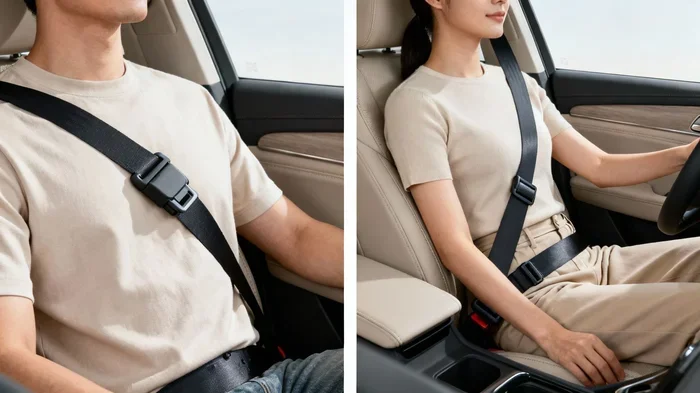
Some adults tuck the shoulder belt behind their back or under their arm. This is extremely dangerous. It eliminates the protective function of the belt and can cause severe internal injuries in a crash. The belt must be worn correctly across the chest and hips.
Mistake 3: Relying on Vehicle Technology
Modern cars have amazing safety technology. But no technology replaces a seat belt. Electronic stability control, automatic emergency braking, and airbags all work best when the occupant is properly restrained. Vehicle safety features are a supplement to seat belts, not a replacement.
Mistake 4: Ignoring Seat Belt Warnings
Most newer vehicles have seat belt warning chimes and lights. Many drivers just silence the warning and move on. This is a bad habit. The warning exists for a reason. Every passenger, including adults in the back seat, should buckle up immediately.
Quick Tips for Making Back Seat Belt Use a Habit
Building the habit of buckling up in the back seat is easier than you think. Here are some practical tips:
- Make it the first thing you do. As soon as you sit down, reach for the belt. Do it before you adjust the seat or the mirrors.
- Set an example. If you have kids, let them see you buckle up every time. Actions speak louder than words.
- Keep the belt visible. Do not let the belt get tangled or stuck behind the seat. A smooth belt makes it easier to use.
- Remind your passengers. If you are the driver, make sure everyone is buckled before you start moving. This is a simple but powerful habit.
- Use rideshare apps that remind you. Some apps have safety features that encourage belt use. Take advantage of them.
- Keep a belt reminder card on your dashboard. A simple visual cue can help you remember until the habit sticks.
Expert Insights on Back Seat Seat Belt Use
We spoke with traffic safety experts about adult back seat belt habits. Here is what they had to say:
Dr. David Harkey, President of the Insurance Institute for Highway Safety: “The back seat is not a safe zone for unbelted adults. In a frontal crash, an unbelted rear occupant can be killed or seriously injure the person in the front seat. Everyone in the vehicle needs to be buckled up.”
Sgt. Mike Brooks, AAA Traffic Safety Representative: “We see too many preventable tragedies where someone in the back seat was not wearing a belt. It takes two seconds to buckle up. There is no excuse not to.”
Laura Adams, Safety and Education Expert at DrivingSchoolUSA: “Parents need to model good behavior. When kids see adults buckling up in the back seat, they are more likely to do the same. It starts with us.”
These experts all agree on one thing. Rear seat belt use is not optional for adults. It is a critical part of accident prevention that everyone should take seriously.
Comparison: Belted vs. Unbelted Rear Passengers
| Factor | Belted Rear Passenger | Unbelted Rear Passenger |
|---|---|---|
| Survival Rate in Frontal Crash | High | Significantly Lower |
| Risk of Ejection | Very Low | Very High |
| Risk of Injuring Front Seat Occupant | Minimal | Very High |
| Legal Compliance | Compliant in Most States | At Risk of Fine |
| Injury Severity in Crash | Reduced | Increased |
| Habit Formation for Children | Positive Role Model | Negative Example |
The comparison makes it clear. Belted rear passengers are safer, more compliant, and set a better example for everyone in the vehicle.
Key Takeaways
- Back seat belts save lives: Unbelted rear passengers face a much higher risk of death in a crash.
- Laws are changing: More states are requiring adults to buckle up in the back seat.
- Injury risk is real: Unbelted back seat occupants can injure themselves and others in the vehicle.
- Rideshare and taxi passengers: Adults often skip belts in rideshares, putting themselves at serious risk.
- Children model adult behavior: When adults do not buckle up, kids are less likely to either.
- Airbags do not replace seat belts: Even with modern safety features, belts are essential for all seats.
- It takes two seconds: Buckling up is the easiest life-saving habit you can build.
Conclusion
The answer to the question “Do adults need to buckle in the back seat every time” is a definitive yes. Do Adults Need to Buckle in the Back Seat is not just a safety slogan. It is a fact supported by science, law, and countless real-world examples.
Every time you get in a car, no matter where you sit, you need to buckle up. It does not matter if the trip is long or short. It does not matter if you are the driver or a passenger. It does not matter if you are in a personal car, a taxi, or a rideshare vehicle.
Back seat seat belt safety is everyone’s responsibility. When you buckle up, you protect yourself, you protect others in the vehicle, and you set a powerful example for the next generation. Make it a habit. Make it automatic. Make it non-negotiable.
The next time you sit in the back seat, do not think about it. Just do it. Click the belt. Pull it tight. Make sure it is snug across your chest and lap. It takes two seconds. It could save your life. And it could save the lives of everyone else in the car too.
Stay safe. Stay buckled. Every time.
Frequently Asked Questions
Do adults really need to wear seat belts in the back seat?
Yes, absolutely. Back seat passengers are at serious risk of injury or death in a crash if they are not belted. Studies show that unbelted rear passengers are three times more likely to die. The back seat is not a safe zone without a belt.
What happens if you don’t wear a seat belt in the back seat?
In a crash, an unbelted rear passenger can be thrown forward into the front seats, strike the windshield, or even be ejected from the vehicle. They can also become a dangerous projectile that injures or kills front seat occupants. The risk of serious rear seat injuries increases dramatically without a belt.
Are there laws requiring adults to buckle up in the back seat?
Yes, many states now have laws requiring adults to wear seat belts in the back seat. Over 30 states plus Washington D.C. require adult back seat seat belt use. The specific penalties and enforcement vary by state, but the trend is toward more comprehensive laws.
Why do so many adults skip the back seat belt?
Common reasons include the belief that short trips are safe, the myth that the back seat is inherently safer, and forgetfulness in rideshares or taxis. Some adults also feel uncomfortable with the belt or mistakenly think airbags will protect them. Education and habit-building are the best solutions.
Can an unbelted back seat passenger really hurt the driver in a crash?
Yes, this is a well-documented phenomenon known as the projectile effect. In a frontal crash, an unbelted rear passenger can be thrown forward with tremendous force. They can strike the front seats, the dashboard, or even the driver. This can cause severe injuries or fatalities to belted front seat occupants.
How can I make sure my whole family buckles up in the back seat?
Start by setting a strong example. Always buckle up yourself, no matter where you sit. Make it a rule in your family that everyone buckles before the car moves. Keep the back seat belts organized and accessible. For younger children, use child safety seats and booster seats as appropriate. Consistency and positive reinforcement go a long way in building safe habits.
=== META TITLE ===
Do Adults Need to Buckle in the Back Seat Every Time?
=== URL SLUG ===
adults-need-buckle-back-seat-every-time