Harley-Davidson Spark Plug Chart – Find Your Perfect Match
Our Harley-Davidson Spark Plug Chart helps you find the right plug for every model and engine type. Whether you ride a Twin Cam or a Milwaukee-Eight, getting the correct spark plug matters for engine health. We cover gap settings, torque specs, heat ranges, and top brand picks. This guide saves you time, money, and guesswork at the parts counter. Read on to match your bike with the perfect spark plug.
If you own a Harley-Davidson, you know that every detail matters. The right spark plug can make the difference between a smooth ride and a rough one. But with so many models and engine types out there, how do you know which plug fits your bike?
That is where a Harley-Davidson Spark Plug Chart comes in handy. It gives you the exact specifications you need for every Harley model and engine. No more guessing. No more wasted trips to the parts store. In this guide, we walk you through everything you need to know. From gap settings to torque specs, we have you covered.
Key Takeaways
- Correct spark plug choice matters: Using the right plug improves engine performance, fuel efficiency, and reliability.
- Gap and torque specs vary by model: Always check the Harley-Davidson Spark Plug Chart for your specific engine.
- NGK and Champion are top brands: Both offer OEM and aftermarket options that work great with Harley engines.
- Heat range affects engine temperature: Picking the wrong heat range can cause pre-ignition or fouling.
- Regular replacement prevents problems: Spark plugs wear out over time and can cause misfires if ignored.
- DIY replacement is easy: With the right tools and this guide, you can change your plugs at home.
📑 Table of Contents
Understanding the Harley-Davidson Spark Plug Chart
A spark plug chart is a simple reference tool. It tells you which spark plug fits which engine. For Harley-Davidson riders, this chart is essential. Harley bikes use different engines across their lineup. Each engine has its own spark plug requirements.
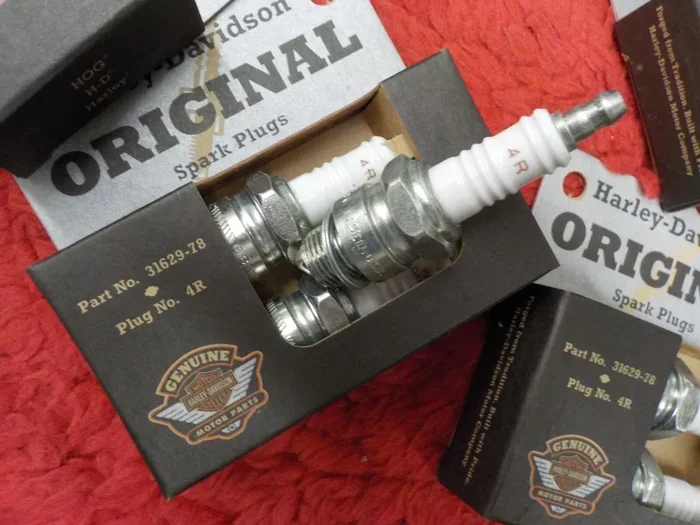
The chart lists key details for each plug. These include the part number, gap size, and torque specification. It also shows the heat range, which tells you how hot the plug runs during operation. Understanding these numbers helps you keep your engine running at its best.
Why the Right Spark Plug Matters
Your Harley-Davidson engine depends on a precise spark to ignite the air-fuel mixture. If the spark plug is wrong, combustion suffers. You may notice rough idling, poor fuel economy, or a misfire. In worst cases, the wrong plug can damage the engine over time.
The right plug ensures clean, efficient combustion. It also helps your bike meet emissions standards. For riders who care about performance and longevity, choosing correctly is a no-brainer.
Key Specs to Look For
When you look at any spark plug chart, focus on these details:
- Part Number: The exact plug model that fits your engine.
- Gap Size: The distance between the center and side electrode. This affects spark strength.
- Torque Spec: How tight to tighten the plug. Over-tightening can strip threads.
- Heat Range: How well the plug dissipates heat. Too hot or too cold causes problems.
- Thread Size and Reach: Ensures the plug screws in correctly.
Always double-check these specs before buying. A small mistake can lead to big engine trouble.
Harley-Davidson Models and Their Spark Plug Specs
Harley-Davidson has several engine families. Each one uses different spark plugs. Let us break it down by engine type so you can find what you need.
Twin Cam Engines (1999 and Newer)
The Twin Cam engine is one of the most popular Harley powerplants. It comes in two main versions: the Twin Cam 88 and the Twin Cam 96. Both engines use specific spark plugs that you can find on the Harley-Davidson Spark Plug Chart.
For most Twin Cam models, the OEM plug is the NGK DPR7EA-9 or Champion RG4HC. The gap is typically 0.040 inches. Torque spec sits at 14 to 16 foot-pounds. These numbers apply to models like the Street Bob, Fat Boy, and Heritage Softail.
Milwaukee-Eight Engines (2017 and Newer)
The Milwaukee-Eight engine represents a major upgrade for Harley. It comes in 107 and 114 cubic inch versions. These big-bore engines need a different plug than the Twin Cam.
The standard plug for Milwaukee-Eight engines is the NGK DPR7EA-9 for the 107 and the NGK DPR8EA-9 for the 114. The gap is 0.040 inches for both. Torque spec is 14 to 16 foot-pounds. Models like the Road King, Street Glide, and Electra Glide use these engines.
Older Evolution Engines (1984 to 1999)
If you ride a classic Harley from the Evo era, your plug needs are different. The Evo engine uses the NGK DPR7EA-9 or Champion RG4HC. The gap is 0.040 inches. Torque spec is 14 to 16 foot-pounds. These bikes include the Dyna, Sportster, and Softail models from that period.
Quick Reference Comparison Table
| Engine Type | OEM Spark Plug | Gap (inches) | Torque (ft-lbs) | Example Models |
|---|---|---|---|---|
| Twin Cam 88/96 | NGK DPR7EA-9 | 0.040 | 14-16 | Street Bob, Fat Boy |
| Milwaukee-Eight 107 | NGK DPR7EA-9 | 0.040 | 14-16 | Road King, Street Glide |
| Milwaukee-Eight 114 | NGK DPR8EA-9 | 0.040 | 14-16 | Electra Glide, Road Glide |
| Evolution (Evo) | NGK DPR7EA-9 | 0.040 | 14-16 | Dyna, Sportster, Softail |
Always confirm your specific model number before ordering. Small variations exist between model years and trims.
How to Read the Spark Plug Chart
Reading a spark plug chart is easier than it looks. Once you understand the format, you can quickly find your plug. Let us walk through it step by step.
Step 1: Identify Your Engine
First, figure out which engine your Harley has. Check your owner manual or look up the model year. The engine type determines the spark plug family. Twin Cam engines use one set of plugs, while Milwaukee-Eight engines use another.
Step 2: Find the Part Number
On the chart, locate the part number for your engine. This is the exact plug you need. Brands like NGK and Champion use their own numbering systems. The part number includes information about the electrode type, gap, and heat range.
Step 3: Check the Gap
The gap is the space between the center electrode and the side electrode. A proper gap ensures the spark fires correctly. Use a feeler gauge to check the gap on any new plug before installing it. Most Harley engines call for a 0.040-inch gap, but always verify.
Step 4: Set the Torque
Torque is how tight you should screw in the plug. Too loose and the plug can vibrate out. Too tight and you risk damaging the threads. Use a torque wrench for accuracy. Most Harley plugs need 14 to 16 foot-pounds.
Expert Tip: Heat Range Explained
The heat range tells you how fast the plug tip dissipates heat. A lower number means a hotter plug. A higher number means a cooler plug. For stock Harley engines, the OEM heat range works perfectly. If you have modified your engine with performance upgrades, you may need a different heat range. Consult a mechanic or the chart for guidance.
Best Spark Plugs for Harley-Davidson Engines
Not all spark plugs are created equal. Some brands stand out for Harley-Davidson engines. Here are the top choices riders trust.
NGK Spark Plugs
NGK is one of the most trusted names in motorcycle spark plugs. Their plugs are known for durability and consistent performance. The NGK DPR7EA-9 is the go-to choice for most Twin Cam and Milwaukee-Eight engines. NGK also offers iridium and platinum options for riders who want extended plug life.
One benefit of NGK plugs is their precision manufacturing. The gap is set accurately at the factory. This means less work for you before installation. Many Harley riders keep NGK plugs in their toolbox at all times.
Champion Spark Plugs
Champion has a long history with Harley-Davidson. Their plugs are a popular OEM choice. The Champion RG4HC and RG4HC are common replacements for Twin Cam engines. Champion plugs offer good performance at a reasonable price.
One thing to note is that Champion plugs sometimes need a little extra gap adjustment out of the box. Always check the gap with a feeler gauge before installing.
Bosch Spark Plugs
Bosch is another solid option for Harley riders. Their platinum and double-platinum plugs offer excellent longevity. Bosch plugs are known for strong spark delivery, which helps with cold starts and throttle response.
While Bosch is not always the OEM choice, they are a great aftermarket option. If you want a reliable plug that lasts a long time, consider Bosch.
When to Consider Aftermarket Plugs
Aftermarket plugs can offer benefits like better material and longer life. Iridium and platinum plugs resist wear better than standard copper plugs. They also provide a more consistent spark over time. If you ride frequently or want less maintenance, aftermarket plugs are worth considering.
However, always stick with plugs that match the OEM specs. Do not change the heat range or gap without a reason. Stick to the Harley-Davidson Spark Plug Chart for guidance.
Spark Plug Maintenance Tips
Changing your spark plug is only half the battle. Proper maintenance keeps your plugs in great shape. Here are some tips every Harley owner should follow.
Check Your Plugs Regularly
Inspect your spark plugs at least once a season. Look for signs of wear like cracked porcelain, corroded electrodes, or carbon buildup. A quick visual check can tell you a lot about your engine health.
If the plug tip is black and sooty, your air-fuel mixture may be too rich. If it is white or blistered, the mixture may be too lean. Both conditions need attention.
Replace Plugs on Schedule
Most Harley-Davidson spark plugs last about 10,000 to 15,000 miles. Check your owner manual for the exact recommendation. Replacing plugs on time prevents misfires and keeps your engine running smooth.
Set a reminder on your phone or in your maintenance log. It is an easy task that pays off in engine reliability.
Use Dielectric Grease
Apply a thin layer of dielectric grease to the plug boot before installing. This prevents corrosion and makes future removal easier. It also keeps moisture out of the ignition connection.
Common Mistakes to Avoid
- Over-tightening the plug: This can strip the threads in the cylinder head. Always use a torque wrench.
- Ignoring the gap: Even new plugs may need gap adjustment. Always check before installing.
- Mixing plug brands: Use the same brand and type on all cylinders for consistent performance.
- Skipping the torque spec: Hand-tightening is not enough. Use proper specs every time.
- Using the wrong plug for your engine: Always cross-reference with the chart for your specific model.
Quick Tips for Spark Plug Replacement
Here are some quick tips to make the job easier:
- Let the engine cool completely before starting.
- Remove the plug wires one at a time to avoid confusion.
- Clean the area around each spark plug before removing it.
- Use a spark plug socket with a rubber insert to protect the plug.
- Start each plug by hand to avoid cross-threading.
- Torque to spec with a calibrated wrench.
- Reconnect plug wires firmly and evenly.
Following these steps ensures a clean, safe spark plug replacement every time.
Common Spark Plug Problems and How to Fix Them
Even with the right plug, problems can happen. Here are the most common issues and how to solve them.
Misfiring Engine
A misfire is one of the most common spark plug symptoms. You will feel a rough idle or a hesitation during acceleration. Often, this is caused by a worn or fouled plug. Check the gap and the electrode condition. Replace the plug if it looks damaged or worn out.
Hard Starting
If your Harley is hard to start, the spark plug may be the culprit. A plug with the wrong gap or a worn electrode cannot create a strong spark. Check the gap setting and replace the plug if needed. Also make sure the plug wire is making good contact.
Reduced Fuel Economy
A bad spark plug can hurt your fuel economy. The engine works harder when combustion is incomplete. If you notice fewer miles per gallon, inspect your plugs. Replacing worn plugs often restores fuel efficiency.
Plug Fouling
Fouling happens when deposits build up on the plug tip. This can be caused by a rich fuel mixture, oil leaks, or short trips. A fouled plug produces a weak or no spark. Clean the plug if it is only mildly fouled. Replace it if the deposits are heavy.
Pre-Ignition and Detonation
Pre-ignition occurs when the air-fuel mixture ignites too early. This can damage the engine over time. It is often caused by a plug with the wrong heat range. If you have installed aftermarket plugs, make sure the heat range matches the OEM spec. Always refer to the Harley-Davidson Spark Plug Chart for the correct range.
Key Takeaways
- Correct spark plug choice matters: Using the right plug improves engine performance, fuel efficiency, and reliability.
- Gap and torque specs vary by model: Always check the Harley-Davidson Spark Plug Chart for your specific engine.
- NGK and Champion are top brands: Both offer OEM and aftermarket options that work great with Harley engines.
- Heat range affects engine temperature: Picking the wrong heat range can cause pre-ignition or fouling.
- Regular replacement prevents problems: Spark plugs wear out over time and can cause misfires if ignored.
- DIY replacement is easy: With the right tools and this guide, you can change your plugs at home.
Conclusion
Finding the right spark plug for your Harley-Davidson does not have to be complicated. The Harley-Davidson Spark Plug Chart gives you all the information you need in one place. From Twin Cam to Milwaukee-Eight, every engine has its own specs. And now you know exactly what to look for.
Remember to check the gap, set the torque correctly, and replace your plugs on schedule. These simple steps keep your engine running strong for miles to come. Whether you ride a Softail, a Touring model, or a classic Sportster, the right plug makes all the difference.
Take a few minutes to consult the chart before your next plug change. Your engine will thank you with smoother starts, better performance, and fewer surprises on the road. Ride smart, ride safe, and keep that Harley firing on all cylinders.
Frequently Asked Questions
How often should I change my Harley-Davidson spark plugs?
Most Harley spark plugs should be replaced every 10,000 to 15,000 miles. Check your owner manual for the exact recommendation. Riding conditions like heat, dust, and stop-and-go traffic can shorten plug life. When in doubt, inspect your plugs regularly and replace them if you see wear.
Can I use a different brand of spark plug on my Harley?
Yes, you can use aftermarket brands like NGK, Champion, or Bosch. Just make sure the part number, gap, and torque spec match what the Harley-Davidson Spark Plug Chart recommends. Do not change the heat range unless you have a specific reason and expert advice.
What happens if the spark plug gap is wrong?
An incorrect gap can cause weak sparks, misfires, and poor fuel economy. A gap that is too wide may not fire at all. A gap that is too narrow produces a weak spark. Always use a feeler gauge to set the gap to the spec listed on the chart.
Do I need a torque wrench to install spark plugs?
Yes, a torque wrench is highly recommended. Over-tightening can strip the threads in the cylinder head. Under-tightening can cause the plug to loosen and fail. The correct torque for most Harley engines is 14 to 16 foot-pounds.
What is the difference between copper, iridium, and platinum spark plugs?
Copper plugs are standard and affordable but wear faster. Iridium and platinum plugs last longer and provide a more consistent spark. They cost more upfront but save money over time. For most Harley riders, the OEM copper plug works perfectly. Upgrade to iridium or platinum if you want extended service life.
Can fouled spark plugs damage my Harley engine?
Yes, fouled plugs can cause misfires that put extra strain on the engine. Over time, this can lead to poor performance and increased emissions. If you notice a fouled plug, clean or replace it right away. Regular maintenance helps prevent fouling from becoming a bigger problem.