Harley-Davidson Tire Pressure Chart – Ultimate Guide
The Harley-Davidson Tire Pressure Chart is an essential reference for every rider who wants peak performance and safety. Knowing the right tire pressure PSI for your specific model can improve handling, fuel efficiency, and tire lifespan. We break down the recommended pressures for popular Harley models in an easy-to-read format. This guide also covers common mistakes, pro tips, and how to read your tire pressure gauge correctly. Whether you are a seasoned rider or a beginner, this chart and advice will help you ride smarter.
Riding a Harley-Davidson is one of the greatest feelings in the world. The open road, the rumble of the engine, and the freedom of the highway all come together in one unforgettable experience. But here is something many riders overlook: your tires. The air inside them plays a huge role in how your bike handles, how safe you are, and how long your tires last. A Harley-Davidson Tire Pressure Chart takes all the guesswork out of this. It tells you exactly how much air your tires need, model by model. In this guide, we will walk you through everything you need to know about tire pressure for your Harley.
Whether you ride a Sportster, a Touring bike, or a Softail, the right tire pressure makes all the difference. Too little air and your tires wear out fast. Too much and your ride gets harsh and unstable. We will show you the recommended PSI for popular Harley models, explain why it matters, and share practical tips you can use today. By the end of this article, you will have a clear understanding of how to keep your tires in perfect shape. Let us get into it.
Key Takeaways
- Correct PSI matters: The right tire pressure keeps your Harley stable, safe, and fuel-efficient on every ride.
- Model-specific values: Different Harley-Davidson models need different front and rear tire pressure settings.
- Check pressure cold: Always measure tire pressure when the tires are cold for the most accurate reading.
- Avoid common mistakes: Overinflation and underinflation both cause serious handling and wear problems.
- Use a quality gauge: A digital or dial tire pressure gauge gives you reliable readings every time.
- Inspect regularly: Make tire pressure checks part of your pre-ride routine for long-lasting tire health.
📑 Table of Contents
Why Tire Pressure Matters for Your Harley-Davidson
Tire pressure is not just a number on a sticker. It is the foundation of your ride quality, safety, and tire longevity. When your tires have the correct amount of air, they contact the road in the best possible way. This means better grip, smoother cornering, and shorter stopping distances. On a Harley-Davidson motorcycle, this matters even more because of the bike’s weight and riding style.
Safety First
Underinflated tires can overheat on long rides. This leads to blowouts and loss of control. Overinflated tires reduce the contact patch, which means less grip on wet roads. Both situations are dangerous. A Harley-Davidson Tire Pressure Chart helps you avoid these risks by giving you the exact pressure your bike needs.
Fuel Efficiency and Tire Wear
Correct tire pressure also affects your fuel economy. Tires with low rolling resistance from proper inflation use less gas. On the flip side, wrong pressure causes uneven tire wear. You might find yourself replacing tires much sooner than expected. That costs you money you could save with a simple pressure check.
Handling and Stability
Your Harley’s handling depends heavily on tire pressure. The right PSI gives you confident cornering and stable highway riding. Too soft, and the bike feels sluggish. Too hard, and every bump gets amplified. Finding the sweet spot with a reliable tire pressure guide makes every ride better.
Understanding the Harley-Davidson Tire Pressure Chart
A tire pressure chart is a reference tool that lists the recommended PSI for each tire on your motorcycle. For Harley-Davidson bikes, the chart typically shows separate values for the front and rear tires. These values depend on the model, engine size, and intended use of the bike.
What Does PSI Mean?
PSI stands for pounds per square inch. It measures the amount of air pressure inside the tire. Most Harley-Davidson motorcycles recommend between 32 and 36 PSI for the front tire and 36 and 42 PSI for the rear tire. However, these numbers change based on the specific model and load conditions. Always check your owner’s manual or the tire pressure chart for your exact bike.
Cold Tire Pressure vs. Hot Tire Pressure
One of the most important things to know is the difference between cold and hot tire pressure. Cold tire pressure is measured when the bike has been sitting for at least three hours or has traveled less than a mile. Hot tire pressure rises as you ride because the air inside the tire heats up. The Harley-Davidson Tire Pressure Chart always lists cold pressure values. This is the number you should use when inflating your tires.
Here is a quick tip: never let air out of a hot tire to match a cold pressure number. The pressure will drop as the tire cools, and you will end up with underinflated tires. Always check and set pressure when the tires are cold.
Front vs. Rear Tire Pressure
Most Harley-Davidson models use different pressure values for the front and rear tires. The rear tire carries more weight, including the rider, passenger, and luggage. Because of this, it usually needs higher pressure than the front tire. The tire pressure settings on the chart reflect this difference clearly.
| Tire Position | Typical PSI Range | Why It Differs |
|---|---|---|
| Front Tire | 32 – 36 PSI | Carries less weight; needs softer pressure for grip |
| Rear Tire | 36 – 42 PSI | Supports rider, passenger, and cargo weight |
Tire Pressure by Popular Harley-Davidson Models
Every Harley model has its own recommended tire pressure. The Harley-Davidson Tire Pressure Chart breaks this down so you can find your exact bike quickly. Below we cover some of the most popular Harley models and their suggested PSI values.
Sportster Models
Sportster bikes like the Iron 883 and Forty-Eight are lighter and more nimble. They typically need lower tire pressure than larger Harleys. For most Sportsters, the front tire pressure is around 33 PSI and the rear is around 36 PSI. Always double-check the sticker on your bike or the owner’s manual to confirm.
Touring Models
Touring bikes like the Road King and Street Glide carry more weight. They often come with larger rear tires and higher pressure requirements. The front tire for touring models usually sits at 36 PSI, while the rear can go up to 42 PSI. If you carry a passenger or luggage, you may need to increase the rear pressure slightly beyond the standard recommendation.
Softail and Dyna Models
Softail and Dyna models like the Low Rider and Fat Boy fall in the middle range. The front tire pressure is typically around 34 PSI, and the rear is around 38 PSI. These bikes have a classic cruiser look and a balanced ride feel, which the right pressure helps maintain.
Street and Police Models
Street models and police bikes are built for heavy use. They often have the highest pressure requirements. The front tire might need 36 PSI, and the rear can go as high as 42 PSI or more depending on the load. These bikes are designed for long hours of riding, so proper inflation is critical.
Quick Reference: Model-Specific Pressure Chart
| Harley Model | Front PSI | Rear PSI |
|---|---|---|
| Sportster (Iron 883, Forty-Eight) | 33 PSI | 36 PSI |
| Touring (Road King, Street Glide) | 36 PSI | 42 PSI |
| Softail (Low Rider, Fat Boy) | 34 PSI | 38 PSI |
| Street / Police Models | 36 PSI | 42+ PSI |
Note: These values are general guidelines. Always refer to your specific model’s owner manual or the tire pressure sticker found on the bike for the exact numbers.
How to Check and Set Your Tire Pressure
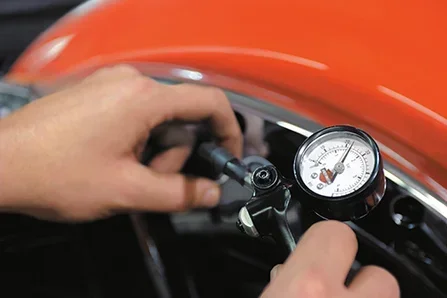
Checking your tire pressure is simple, but doing it correctly makes all the difference. A tire pressure gauge is the only tool you need. You can get a basic analog gauge or a digital one. Digital gauges are easier to read and often more accurate.
Step-by-Step Process
- Make sure your tires are cold. Park the bike for at least three hours before checking.
- Remove the valve cap from the tire stem.
- Press the gauge firmly onto the valve stem.
- Read the PSI number on the gauge.
- Compare the reading to the Harley-Davidson Tire Pressure Chart for your model.
- If the pressure is low, add air with a compressor or air pump.
- If the pressure is high, release a small amount of air by pressing the valve core gently.
- Replace the valve cap when you are done.
Best Tire Pressure Gauges for Harley Riders
Not all tire pressure gauges are created equal. Here are some tips for choosing a good one:
- Digital gauges: Easy to read and very accurate. Great for quick checks at the gas station.
- Dial gauges: Durable and precise. A favorite among serious Harley riders.
- Pencil-style gauges: Compact and affordable. Good to keep in your saddlebag for emergencies.
Invest in a quality gauge and keep it in your riding gear. Checking your pressure before every ride takes less than a minute and can save you from a flat tire on the highway.
Common Tire Pressure Mistakes to Avoid
Even experienced riders sometimes make mistakes with tire pressure. Knowing what to avoid can save you time, money, and risk on the road.
Mistake 1: Ignoring the Rear Tire Pressure
Many riders focus only on the front tire and forget the rear. The rear tire carries the most weight and takes the most abuse. Always check both tires and set the pressure according to the tire pressure chart for your model.
Mistake 2: Guessing the Pressure
Never guess how much air is in your tires. Feel is not a reliable method. Use a proper gauge every time. A tire pressure monitoring system (TPMS) can also help you keep track in real time, but a manual gauge should always be your primary tool.
Mistake 3: Overinflating for Better Mileage
Some riders think higher pressure equals better fuel economy. While this is true to a small extent, overinflation reduces grip and makes the ride uncomfortable. Stick to the recommended PSI from the Harley-Davidson Tire Pressure Chart for the best balance of comfort and efficiency.
Mistake 4: Forgetting to Check After Loading
If you add a passenger or heavy luggage, your tire pressure needs may change. Many Harley models have a higher rear pressure recommendation when fully loaded. Check the chart for your specific load condition before a long trip.
Mistake 5: Neglecting Tire Age and Condition
Even with perfect pressure, old or damaged tires are dangerous. Check the tread depth and look for cracks, bulges, or uneven wear. A tire pressure checklist that includes visual inspection is the best approach.
Expert Tips for Long-Lasting Tire Performance
Getting the right pressure is only part of the equation. Here are some expert tips to help your Harley tires last longer and perform better.
Rotate Your Tires Regularly
Tire rotation helps distribute wear evenly. Most Harley riders should rotate their tires every 5,000 to 7,000 miles. This simple habit can double the lifespan of your tires and save you significant money over time.
Keep Tires Clean
Dirt, oil, and road grime can break down tire rubber over time. Clean your tires with a mild soap and water after every ride. Avoid harsh chemicals that can dry out the rubber and cause cracks.
Store Your Harley Properly
If you store your bike for the off-season, keep the tires properly inflated. Store the bike away from direct sunlight and heat sources. Consider using a tire cover or moving the bike on a stand to reduce flat spots from prolonged contact with the ground.
Know When to Replace Your Tires
No matter how well you maintain them, tires have a limited lifespan. Most motorcycle tires should be replaced every 5 to 7 years, even if the tread looks fine. The rubber compound degrades over time, which affects grip and safety. Use the Harley-Davidson Tire Pressure Chart as part of your regular maintenance routine to get the most out of every set of tires.
Quick Tips for Tire Pressure Success
- Check your tire pressure at least once a week.
- Always measure when the tires are cold.
- Keep a tire pressure gauge in your riding bag.
- Follow the tire pressure settings for your specific load condition.
- Replace valve stems every 2 to 3 years to prevent slow leaks.
- Use the recommended tire inflation levels for your model and riding style.
Conclusion
Your Harley-Davidson Tire Pressure Chart is one of the most valuable tools you have as a rider. It takes the mystery out of tire care and gives you clear, actionable numbers to follow. The right tire pressure improves your safety, your ride quality, and the life of your tires. It is one of the simplest things you can do for your bike, yet it makes the biggest difference.
Make it a habit to check your tire pressure regularly. Use a quality gauge, follow the recommended PSI for your model, and never skip a check before a long ride. Your tires are the only part of your Harley that touches the road. Treat them well, and they will reward you with years of smooth, safe riding. Keep this guide handy, share it with fellow riders, and ride with confidence knowing your tires are set up right.
Frequently Asked Questions
What PSI should my Harley-Davidson tires be at?
The recommended PSI depends on your specific Harley model. Most Sportsters need around 33 PSI in the front and 36 PSI in the rear. Touring models typically require 36 PSI front and 42 PSI rear. Always check the Harley-Davidson Tire Pressure Chart or your owner’s manual for the exact numbers.
How often should I check my Harley’s tire pressure?
You should check your tire pressure at least once a week and always before a long ride. Tire pressure can change with temperature swings and slow leaks over time. A quick check takes less than a minute and keeps you safe on the road.
Can I use the same tire pressure for different loads?
No, tire pressure should change based on your load. When riding solo, use the standard PSI from the chart. When carrying a passenger or heavy luggage, increase the rear tire pressure as recommended. Check the tire pressure settings for your specific load condition in the owner’s manual.
What happens if my Harley tires are underinflated?
Underinflated tires cause poor handling, increased fuel consumption, and uneven tire wear. The tire sidewalls flex too much, which leads to overheating and a higher risk of blowouts. Always use the correct PSI from the tire pressure guide to avoid these problems.
Should I check tire pressure when the tires are hot or cold?
Always check tire pressure when the tires are cold. Riding heats up the air inside the tire and raises the PSI reading. The Harley-Davidson Tire Pressure Chart lists cold pressure values. Wait at least three hours after riding before checking for the most accurate reading.
Do I need a tire pressure monitoring system for my Harley?
A TPMS is not required, but it is very helpful. It gives you real-time pressure readings and alerts you if the pressure drops. Even with a TPMS, you should still use a manual tire pressure gauge for regular checks. The system is a great backup tool for staying on top of your tire health.